SSA Programme – Child Labour Erradication
Child labour remains one of the most critical barriers to achieving universal education and equitable social development. Children engaged in labour are deprived of their fundamental right to education, healthy growth, and a safe childhood. Recognizing this challenge, SEEDS has been actively involved in the Sarva Shiksha Abhiyan (SSA) Programme with a strong focus on Child Labour Eradication and the mainstreaming of out-of-school children into the formal education system.
We believes that child labour can be eradicated only when every child has access to free, compulsory, quality, and inclusive education. Through strategic interventions under SSA, SEEDS has worked to identify child labourers, prevent school dropouts, provide alternative learning opportunities, and ensure the successful reintegration of children into regular schools.
The SSA Programme implemented by SEEDS aims to achieve the following objectives:
- To eradicate child labour by ensuring universal access to education
- TTo identify and rehabilitate school dropouts and working children
- To provide alternative and bridge education for out-of-school children
- To mainstream rehabilitated children into formal schools
- To prevent relapse into child labour through continuous monitoring
- To strengthen community ownership for child protection and education
- To create awareness among parents, Panchayat leaders, and institutions on child rights
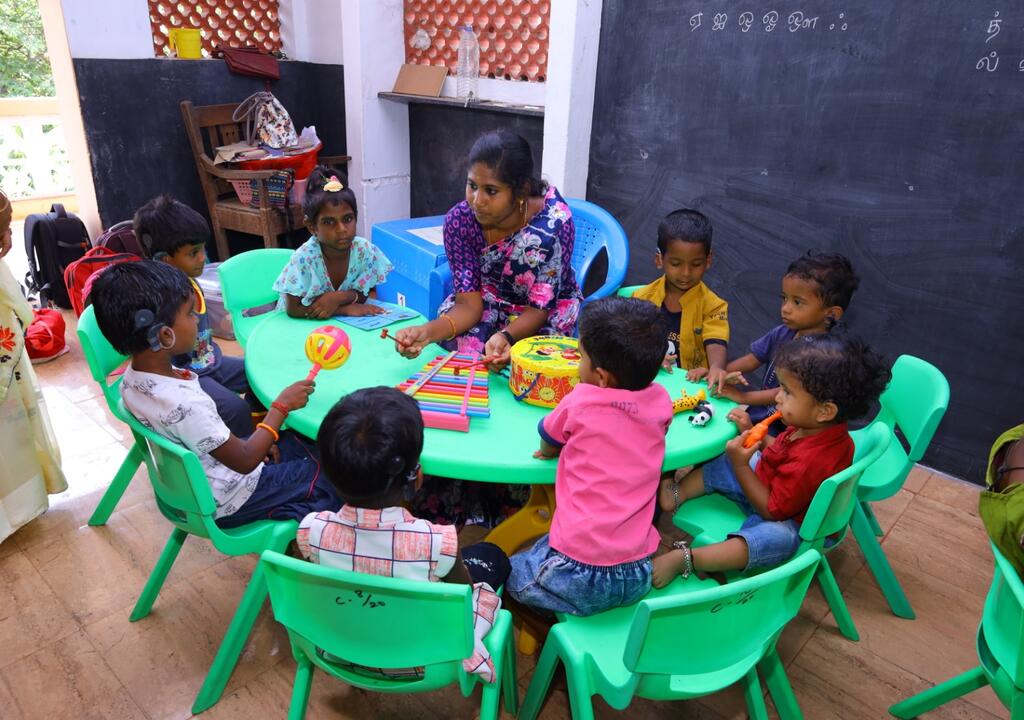
Programme Area and Target Group
The SSA Child Labour Eradication Programme was implemented in Aruppukottai and Tiruchuli Blocks of Virudhunagar District, covering vulnerable villages with a high incidence of school dropouts and child labour.
* Child labourers. * School dropout children. * First-generation learners. * Children from migrant, poor, and marginalized families *Parents and guardians of working children
Implementation Strategy
We adopted a multi-dimensional and child-centered strategy under the SSA framework to address both the causes and consequences of child labour.
IIdentification andSurvey
Comprehensive surveys were conducted in selected villages to identify:
- Children engaged in labour
- School dropouts and irregular school attendees
- Socio-economic factors contributing to child labour
The collected data served as the foundation for planning targeted interventions and individualized rehabilitation plans.
Awareness and Community Mobilization
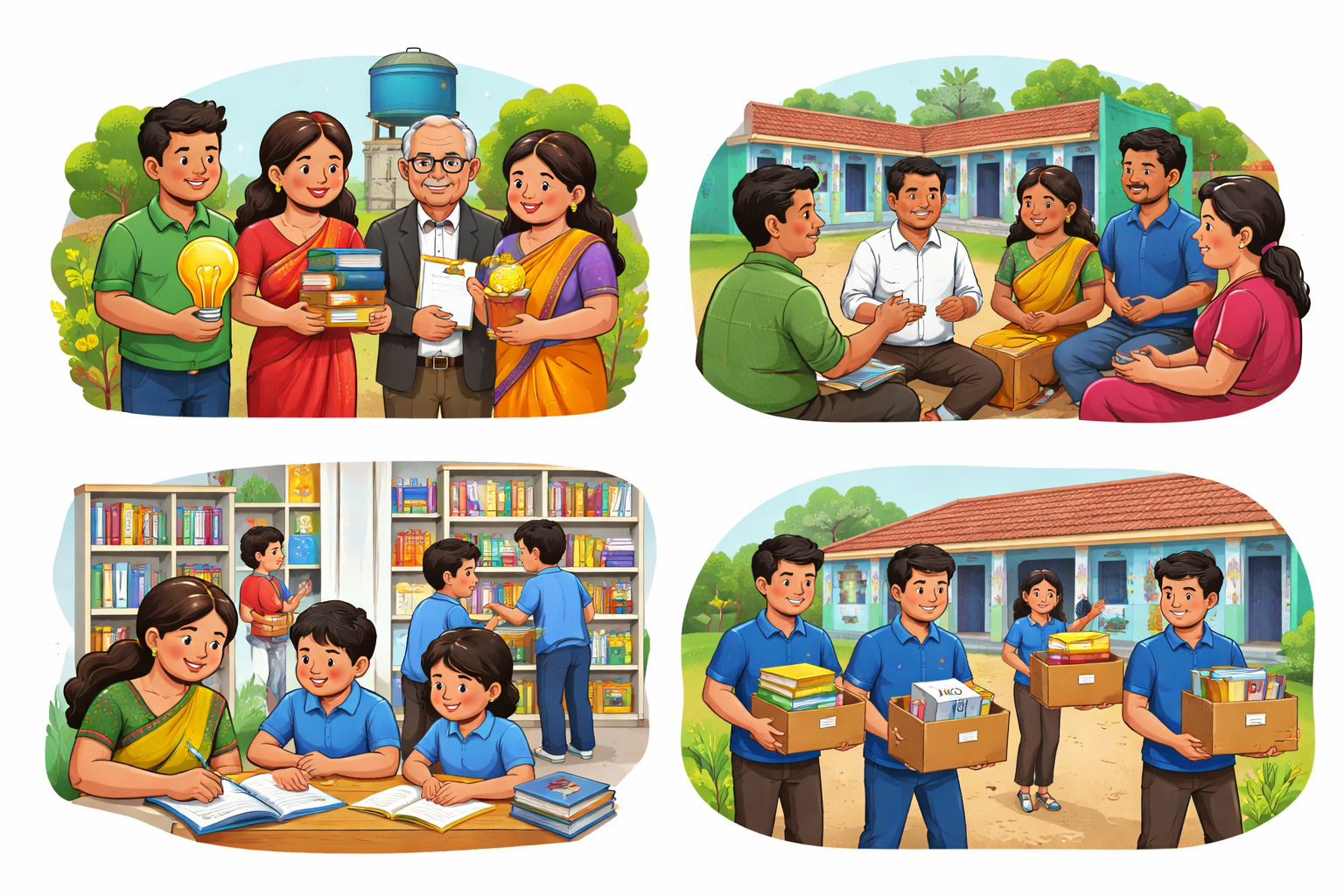
Community awareness plays a vital role in preventing child labour. SEEDS organized:- Village-level awareness campaigns
- Street plays and group discussions
- Parent meetings and community consultations
These activities helped sensitize families on the importance of education, child rights, and the long-term risks of child labour.
Alternative Innovative Education (AIE) Centres
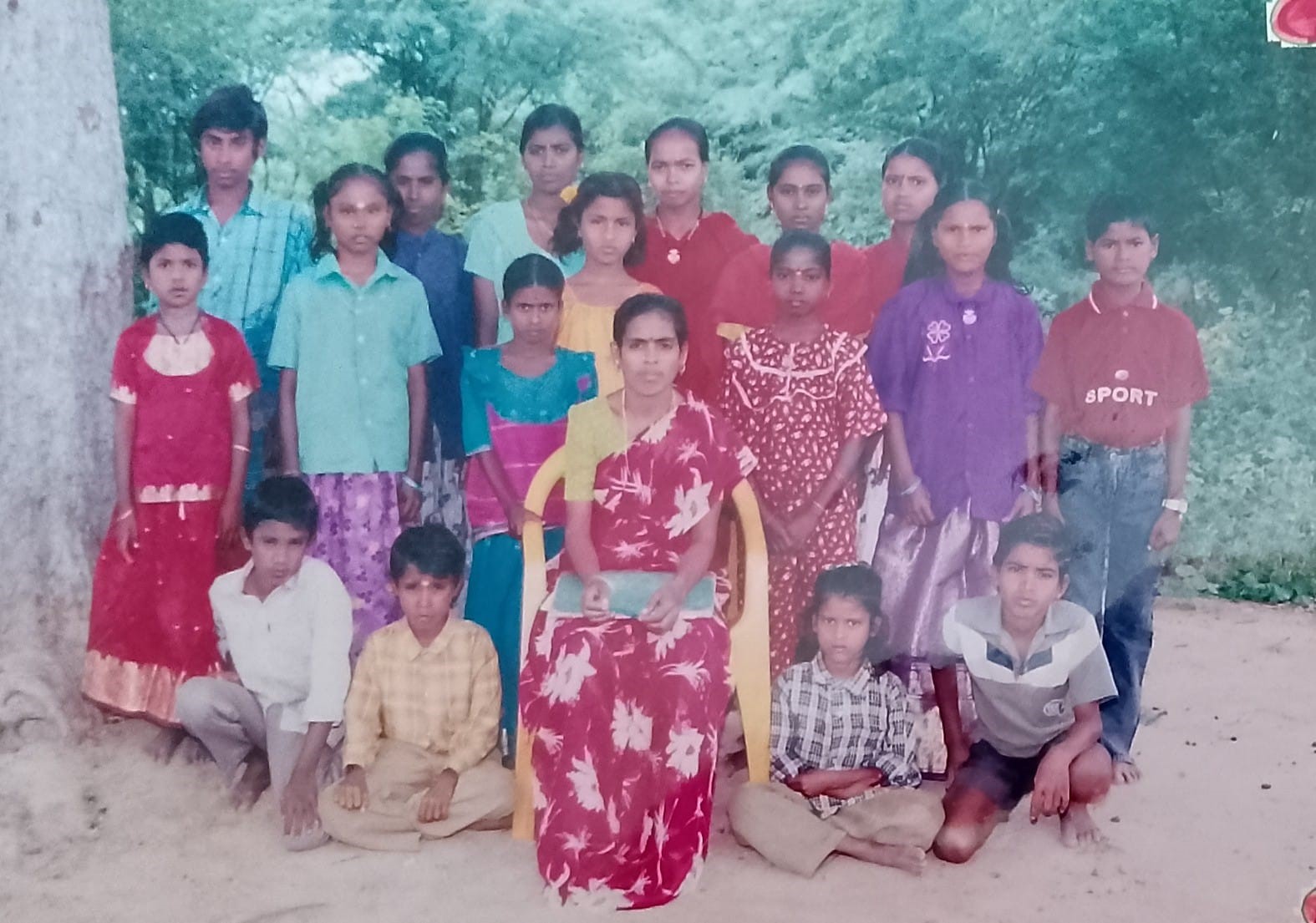
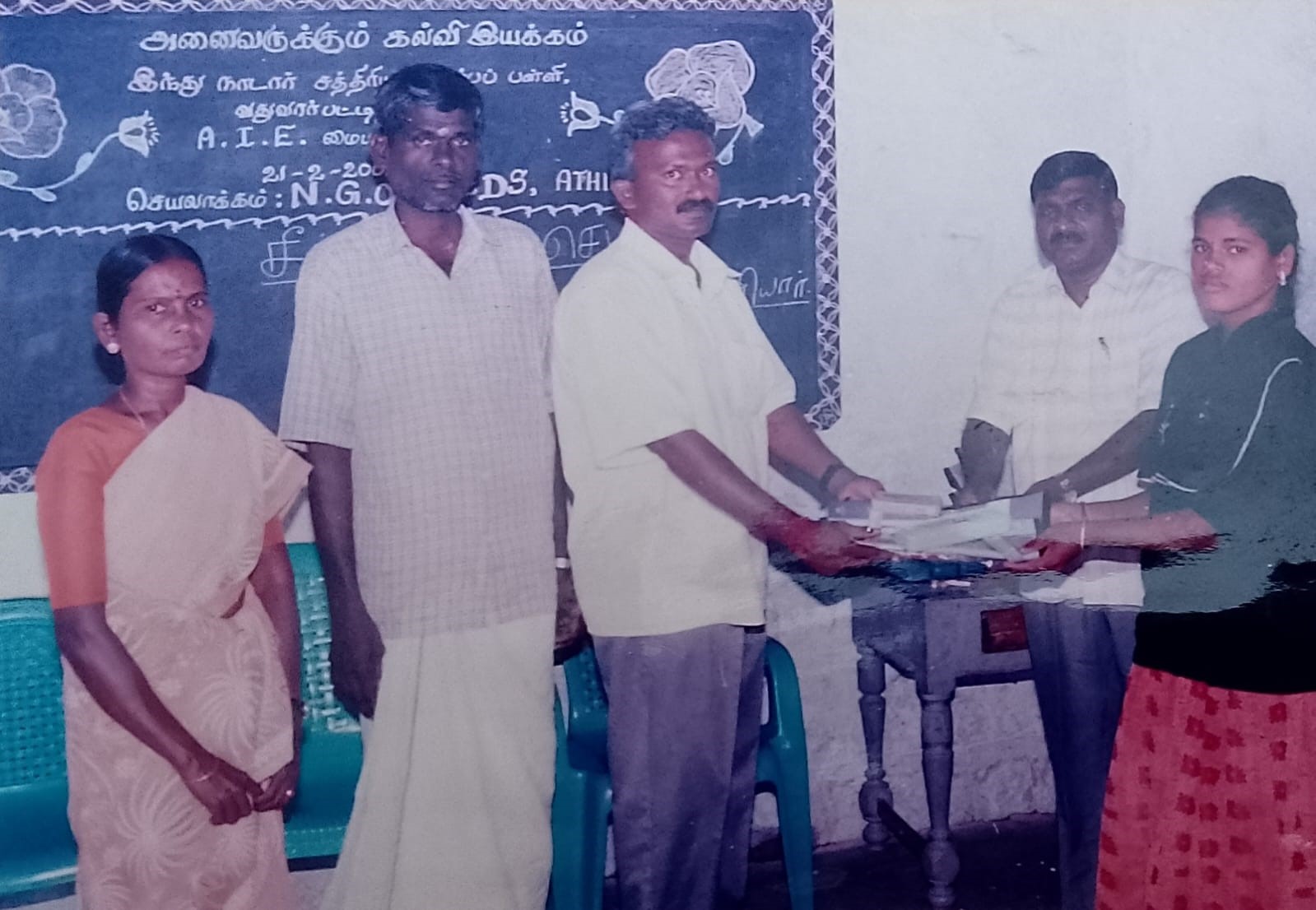
To support children withdrawn from labour or those who had dropped out of school, SEEDS established Alternative Innovative Education (AIE) Centres under SSA. These centres functioned as bridge schools, providing:- Age-appropriate learning
- Flexible learning schedules
- Individual attention and remedial education
- Life skills and value-based education
AIE Centres were operated in villages including:
- Maninagaram
- Kovilangulam
- Market Areas
- Chinna Chettikurichi
- Kurunthamadam
- Vahaikulam
A total of 83 children were enrolled in AIE Centres and provided with:
- Free educational kits
- Uniforms
- Medical assistance
- Exposure visits
Special Schools for Dropout Children
In addition to AIE Centres, We operated Special Schools under SSA to support children requiring intensive academic and psychosocial support.
These schools focused on:
1.Accelerated learning
2.Health and nutrition support
3.Emotional and mental well-being
4.Building confidence and discipline
Special Schools were conducted in the following villages:
| Village | Number of Students |
|---|---|
| Podampatti | 18 |
| Varthuvarpatti | 12 |
| Sempatti | 12 |
| Puliyooran | 12 |
Enrolment and Mainstreaming Support
One of the key outcomes of the programme was the successful re-enrolment and mainstreaming of children into formal education.
Key initiatives included:
1.100% enrolment campaigns in target villages
2.Support for school admission and documentation
3.Regular follow-up with schools and teachers
4.Distribution of learning materials and uniforms
As a result, several dropout children were re-integrated into regular schools, reducing the risk of relapse into child labour
Capcity Building and Institutional Strengthening
We strengthened local institutions to sustain child labour eradication efforts through:
1.Training for Parent Teacher Associations (PTAs)
2.Capacity building for Village Education Committees
3.Orientation programmes for Panchayat Presidents, CBO leaders, and community volunteers
These efforts empowered local stakeholders to take collective responsibility for child protection and school retention.
Child Rights Promotion and Collective Action
We integrated child rights education into the SSA programme by forming Child Collectives in selected villages. These groups enabled children to:
1.Understand their rights and responsibilities
2.Participate in decision-making
3.Advocate for education and child protection
4.Develop leadership and communication skills
Five Child Collective Groups were formed, providing a platform for children’s voices in community development.
Key Ahievements and Impact
The SSA – Child Labour Eradication Programme has achieved significant outcomes:
i..Meenatchipuram Village declared as a No Child Labour Panchayat
ii.24 dropout childrenenrolled in regular schools
iii.Strengthened community vigilance against child labour
iv.Participation of village representatives in the State-Level Consultation on the Education Bill – 2005
v.Improved awareness on child rights and compulsory education
These achievements reflect the effectiveness of a community-driven and education-focused approach.
Sustainability and Monitoring
We ensured sustainability through:
i.Continuous follow-up with families and schools
ii.Community-based monitoring mechanisms
iii.Active involvement of Panchayats and PTAs
iv. Child-friendly grievance redressal mechanisms
Regular monitoring helped prevent children from returning to labour and ensured long-term educational continuity.
Partnerships and Support
The programme was sponsored by ActionAid India through CEDAR, Madurai (Nodal Agency).we played the role of organizer and facilitator in implementation.
While financial transactions were managed by the nodal agency, SEEDS provided full operational support, community coordination, and programme execution.
Way Forward
Building on its experience under SSA, SEEDS plans to:
i.Expand child labour eradication initiatives to more vulnerable villages
ii.Strengthen bridge education and remedial learning support
iii.Integrate vocational orientation for older children
iv.Enhance convergence with government departments and schemes
v.Promote child participation through children’s forums and parliaments