
Disaster Resilience Management through Climate Risk-Informed Programming (ECO-DRR)
India is highly vulnerable to disasters, facing nearly 30 different types such as floods, droughts, cyclones, landslides, soil erosion, and earthquakes. Climate Change has further intensified these risks by increasing the frequency and severity of extreme weather events, directly impacting livelihoods, ecosystems, and vulnerable communities.
The ECO-DRR Project (Disaster Resilience Management through Climate Risk-Informed Programming with Systemic Change) responds to these challenges by strengthening climate resilience, disaster preparedness, and sustainable development at the grassroots level.
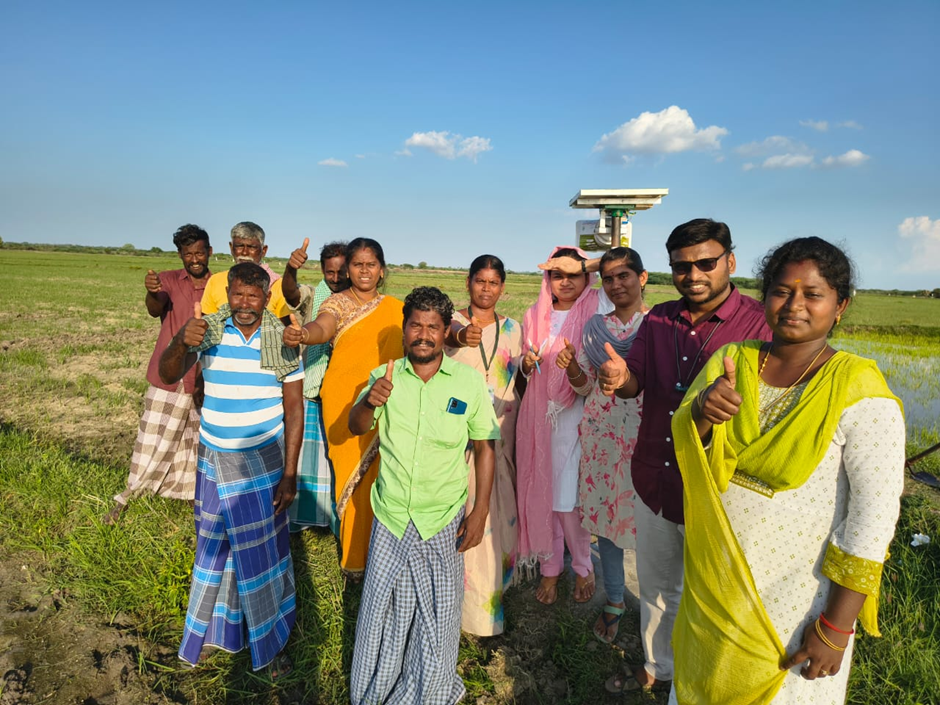
Implemented in Kariapatti Block, Virudhunagar District (Tamil Nadu), the project focuses on empowering farmers and communities to anticipate, adapt, and respond to climate-induced risks through science-based planning, nature-based solutions, and community participation.
Project Partners
Implementing Agency: SEEDS
Technical & Knowledge Partners:
- IIT Gandhinagar
- Climate and Water Lab – UNICEF
- Gorakhpur Environmental Action Group (GEAG)
- RedR India
Funder: IndusInd Bank
Our Core Objectives
Integrate climate risk assessments into disaster risk reduction and development planning at Gram Panchayat, District, and State levels.
Promote systemic change through policy reforms, institutional strengthening, and capacity building of Government Line Departments.
Enhance community-based resilience by empowering vulnerable populations with climate knowledge, adaptive tools, and behaviour change practices.
Strengthen multi-sectoral coordination linking climate science, governance, and disaster management.
Reduce disaster-induced losses by addressing vulnerabilities in infrastructure, ecosystems, and livelihoods.
Multi-Disciplinary & Multi-Sectoral Collaboration
Six Strategic Themes
1. Mainstreaming DRR into Government Ecosystem
- District Climate Risk Profiling conducted by GEAG
- Local vulnerability assessments across Gram Panchayats
- Sectoral Resilience Priorities developed through a 3-day multi-stakeholder workshop
- Climate-Smart Governance Training (5 days) for government officials by RedR India
- Policy dialogues to integrate Eco-DRR strategies into District Disaster Management Plans (DDMPs)
2. Fostering Early Warning – Early Action
- Deployment of real-time climate and early warning tools developed by IIT Gandhinagar
- Formation and revival of Gram Panchayat Disaster Management Committees (GP-DMCs)
- Community training on anticipatory action and disaster preparedness
3. Climate-Sustained Agriculture & Alternate Livelihoods
- Promotion of climate-smart agriculture (drought-resistant crops, organic practices)
- Crop insurance enrolment and access to government agriculture schemes
- Women SHGs supported with alternate livelihoods:
- Mushroom cultivation
- Goat / cow rearing
- Small shops and micro-businesses
- Skill development trainings
4. Climate-Sensitive Water Resource Management
- Construction and revival of:
- Recharge pits
- Percolation tanks
- Ponds and lakes
- Participatory groundwater management across all 25 Gram Panchayats
- Climate-informed irrigation planning
5. Protecting Biodiversity & Climate Adaptation
- Community-led afforestation and tree plantation drives
- Plantation of over 11,000 trees
- Wetland and water body rejuvenation
- Medicinal and palm plant distribution through MGNREGS
6. Promoting a Culture of Preparedness
- Vulnerability, Risk, and Capacity Assessments
- Formation and strengthening of Task Force Teams (TFTs)
- Development of Risk-Informed Gram Panchayat Development Plans (GPDPs)
- Health camps and vaccination drives
Key Achievements (Last 1.5 Years)
- 1,000+ farmers and community members directly benefited
- 11,000+ trees planted for ecological resilience
- 25 Gram Panchayats covered under climate and disaster planning
- Improved access to government welfare schemes, agricultural inputs, insurance, skill development and livelihood support
- Strengthened local governance and disaster preparedness systems
Impact Statement
The ECO-DRR Project demonstrates that integrating environmental stewardship with disaster risk reduction can create sustainable, inclusive, and climate-resilient communities. Continued investment in local capacities, ecosystem restoration, and policy alignment is essential to scale and replicate this model across vulnerable regions.