Community Libarary
COMMUNITY LIBRARY PROGRAMME (UREKA PEOPLE’S LIBRARY)
Education does not end with school; it is a lifelong process that shapes knowledge, values, and character. In rural and marginalized communities, children often have limited access to books, reading spaces, and learning resources beyond their school curriculum. This lack of exposure restricts their imagination, creativity, and overall intellectual development.
Understanding this gap, SEEDS initiated the Community Library Programme, popularly known as the Ureka People’s Library Programme, to promote reading habits, enhance general knowledge, and nurture leadership qualities among rural children. The programme aims to create a joyful learning environment within the community, where children can explore books, exchange ideas, and develop a love for reading from an early age.
Objectives of the Community Library Programme
- To promote reading habits among rural children
- To enhance general knowledge and curiosity beyond school textbooks
- To improve reading, writing, and comprehension skills
- To provide easy access to quality children’s literature in remote villages
- To inculcate moral values, creativity, and critical thinking
- To develop leadership and teamwork skills through children’s clubs
- To create a community-based learning space owned and supported by villagers
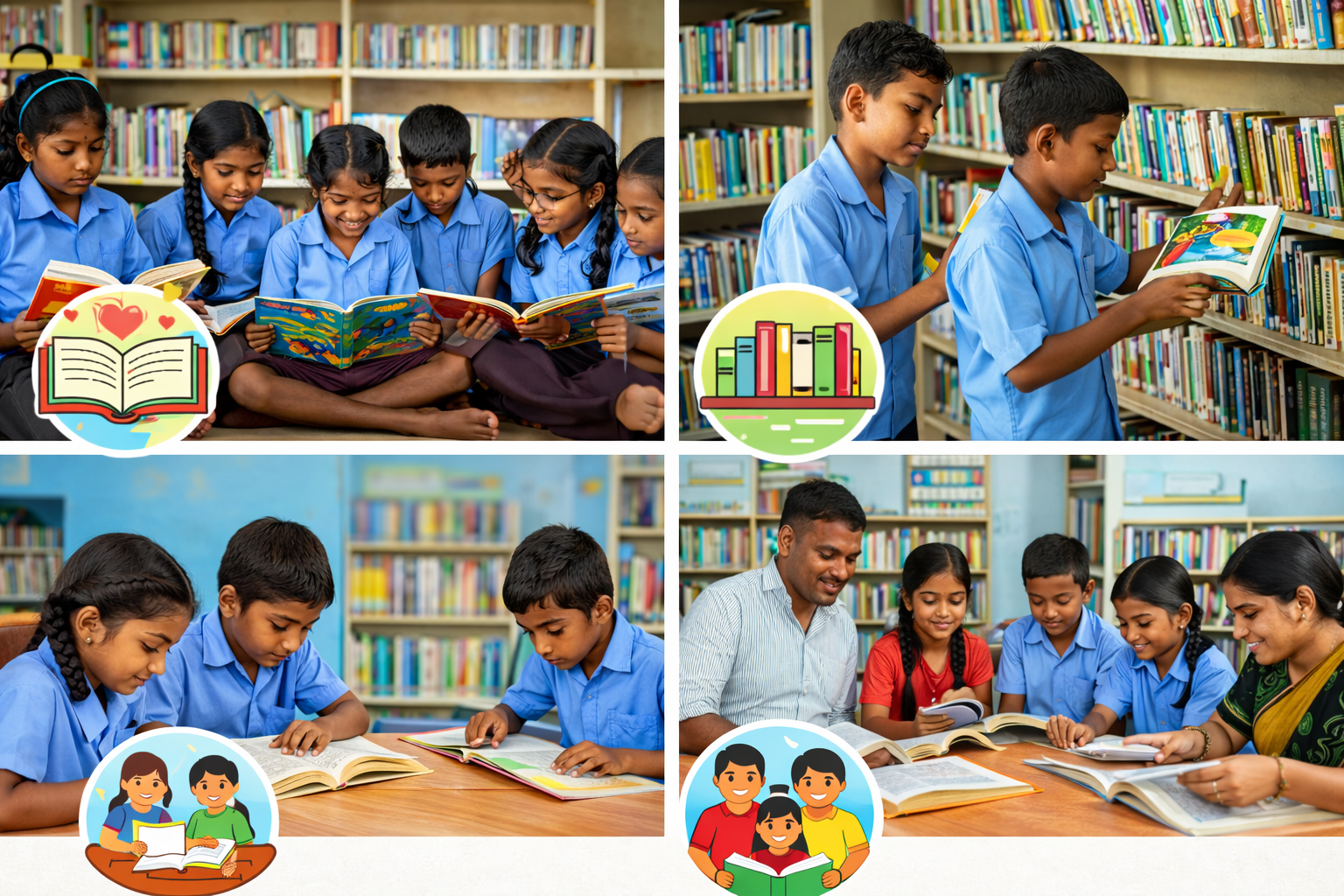
Programme Area and Target Group
The Community Library Programme is implemented in 50 backward and underserved villages of Aruppukottai Block, Virudhunagar District.
Target Group:
i.Children aged 5–14 years
ii.First-generation learners
iii.Children from poor and marginalized families
iv.School-going children requiring additional learning support
At present, the programme benefits 1,572 children, offering them daily opportunities to engage with books and learning activities.
Structure and Functioning of the Community Libraries
Each Community Library is established within the village and managed by a local volunteer selected from the community. This ensures accessibility, trust, and sustainability.
Key features include:
i.One library per village
ii.A trained volunteer responsible for library management
iii.Fixed evening hours for book distribution and reading
iv.Regular interaction with children and parents
Collection of Books
Each library is equipped with approximately 150 titles, carefully selected to meet the learning needs and interests of children. The collection includes:
i.Science and basic scientific concepts
ii.Fiction and science fiction
iii.Moral education and value-based stories
iv.Folk tales and ancestral stories
v.Disaster management and environmental awareness books
The diversity of books encourages children to read widely and develop a balanced perspective.
Role of Volunteers
Volunteers play a crucial role in the success of the Community Library Programme. Their responsibilities include:
i.Maintaining library records and book circulation
ii.Distributing and collecting books daily
iii.Guiding children in book selection
iv.Encouraging regular reading habits
v.Visiting nearby schools periodically to coordinate reading activities
vi.Facilitating group discussions and competitions
The involvement of local volunteers strengthens community ownership and continuity of the programme.
Children’s Clubs and Learning Activities
To make reading interactive and enjoyable, SEEDS has formed Children’s Clubs in all programme villages. These clubs serve as platforms for collective learning and leadership development.
Key activities conducted include:
i.Story reading and story discussion sessions
ii.Drawing and creative writing competitions
iii.Scientific games and quizzes
iv.Street theatre and cultural performances
v.Exposure visits and learning tours
Through these activities, children gain confidence, improve communication skills, and learn teamwork and leadership.
Educational and Developmental Impact
Educational Outcomes:
Personal and Social Development:
Teachers and parents have reported noticeable improvements in children’s learning behavior and discipline.
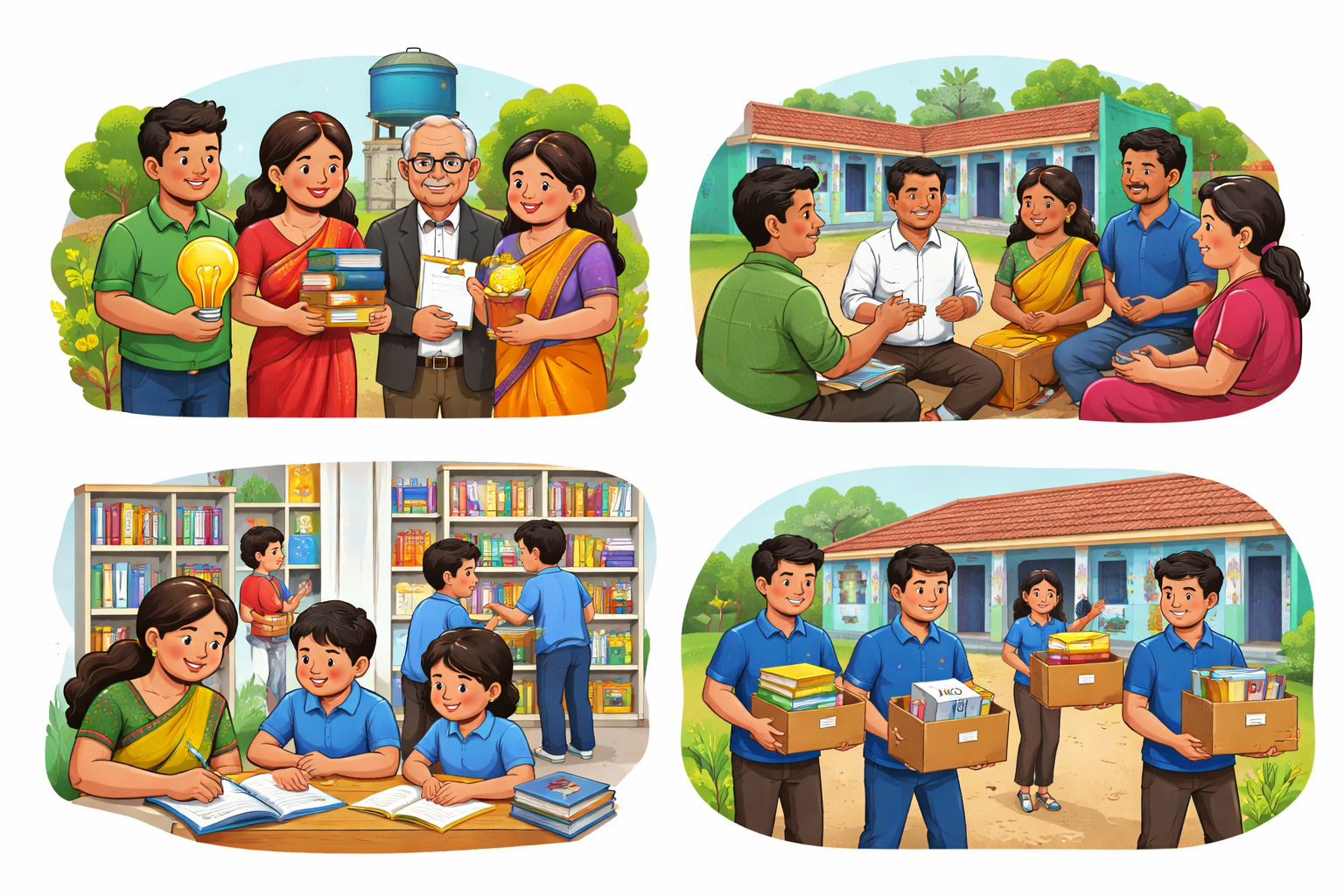
Community Participation and Ownership
This collective involvement ensures protection of library resources and long-term sustainability. Parents actively encourage children to attend library sessions, recognizing the value of reading in their overall development.
Partnership and Support
The Community Library Programme is implemented with the support of AID India, Chennai. The partnership has enabled SEEDS to expand the programme to multiple villages and maintain quality learning resources for children.
This collaboration demonstrates how civil society partnerships can effectively address educational gaps in rural areas.
Monitoring and Follow-up
SEEDS conducts regular monitoring to ensure effective functioning of the libraries. Monitoring activities include:
1.Periodic field visits by SEEDS staff
2.Review meetings with volunteers
3.Assessment of children’s participation and reading levels
4.Feedback collection from parents and teachers
Based on feedback, books are replenished and activities are refined to meet children’s evolving learning needs.
Sustainability of the Programme
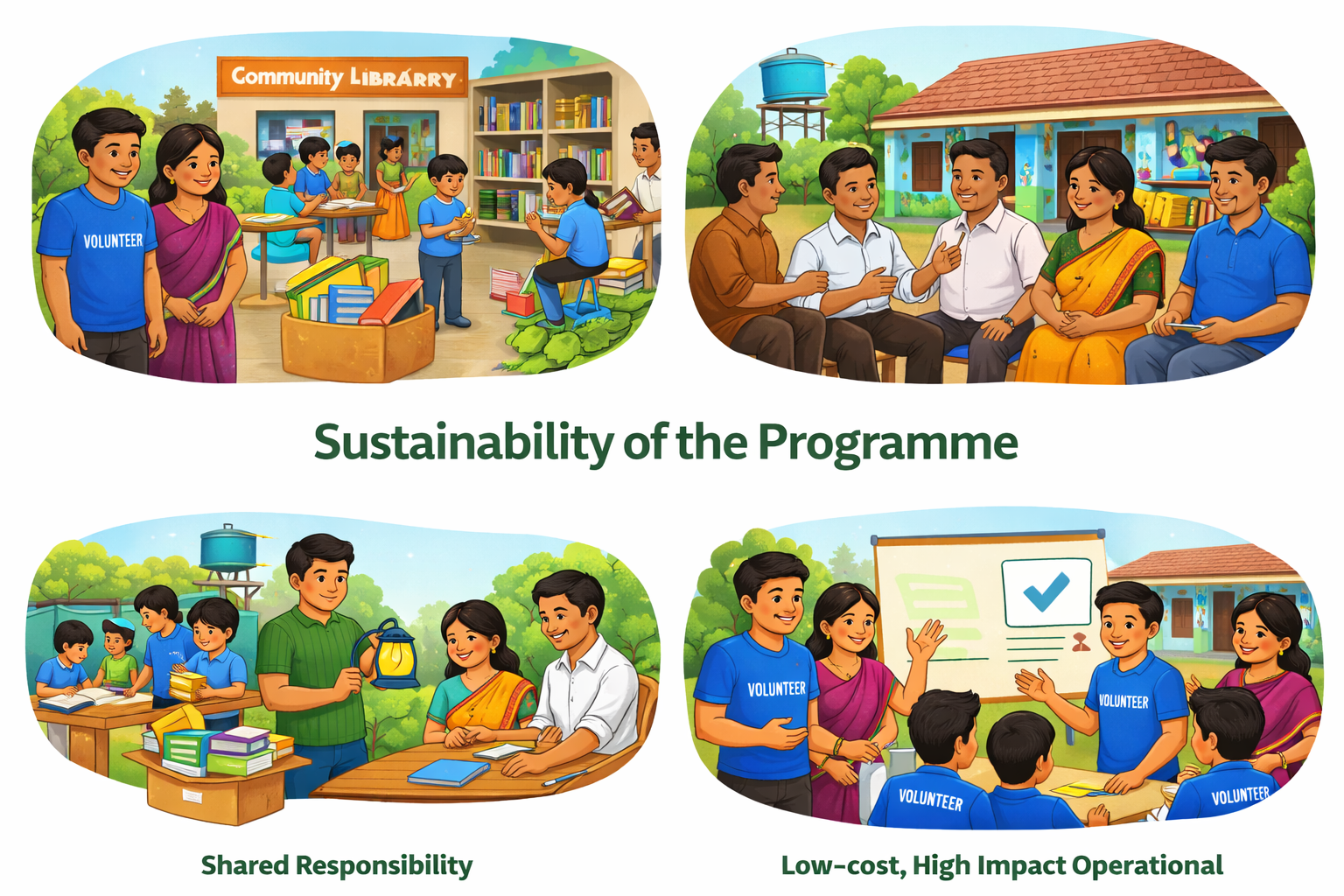
The Community Library Programme is designed to be sustainable through:
i.Community-based volunteer management
ii.Shared responsibility with Panchayats and parents
iii.Low-cost, high-impact operational model
iv.Continuous motivation and capacity building of volunteers
SEEDS encourages communities to gradually take ownership of library operations to ensure continuity beyond project support.