

Bio Diversity Conservation
Himalaya CC
The Himalaya–SEEDS Biodiversity Conservation Project 2025 is a large-scale environmental initiative implemented in Virudhunagar District to restore degraded landscapes, increase green cover, and support sustainable rural livelihoods.
Supported by Himalaya Wellness Company under its CSR initiative and implemented by SEEDS, the project focuses on community-driven tree plantation and biodiversity restoration.
Launched in June 2025, the initiative has transformed barren and underutilized lands into productive and biodiverse ecosystems.
Tree Varieties Planted
The project emphasizes diversity and ecological balance by planting a mix of native, timber, fruit-bearing, and medicinal species.
Species Planted
- Albizia lebbeck (Vaagai)
- Azadirachta indica (Neem)
- Bauhinia variegata (Mountain Ebony)
- Dalbergia latifolia (Indian Rosewood)
- Delonix regia (Flame Tree)
- Ficus carica (Fig)
- Madhuca longifolia (Mahua)
- Manila Tamarind
- Mimusops elengi (Spanish Cherry)
- Muntingia calabura (Singapore Cherry)
- Peltophorum pterocarpum (Copper Pod)
- Polyalthia longifolia (Ashoka Tree)
- Pongamia pinnata (Pungam)
- Pterocarpus marsupium (Indian Kino Tree)
- Pterocarpus santalinus (Red Sanders)
- Simarouba glauca (Paradise Tree)
- Swietenia macrophylla (Mahogany)
- Syzygium cumini (Jamun)
- Tamarindus indica (Tamarind)
- Tectona grandis (Teak)
- Terminalia arjuna (Arjun Tree)
- Terminalia bellirica (Baheda)
- Terminalia catappa (Indian Almond)
- Thespesia populnea (Portia Tree)
Why These Species?
- Enhance biodiversity and ecosystem restoration
- Provide long-term economic returns (timber & fruits)
- Support wildlife, birds, and pollinators
- Improve soil fertility and water retention
- Strengthen climate resilience
Our Approach
The project follows a community-centered and scientific approach:
- Identification of degraded and unused lands
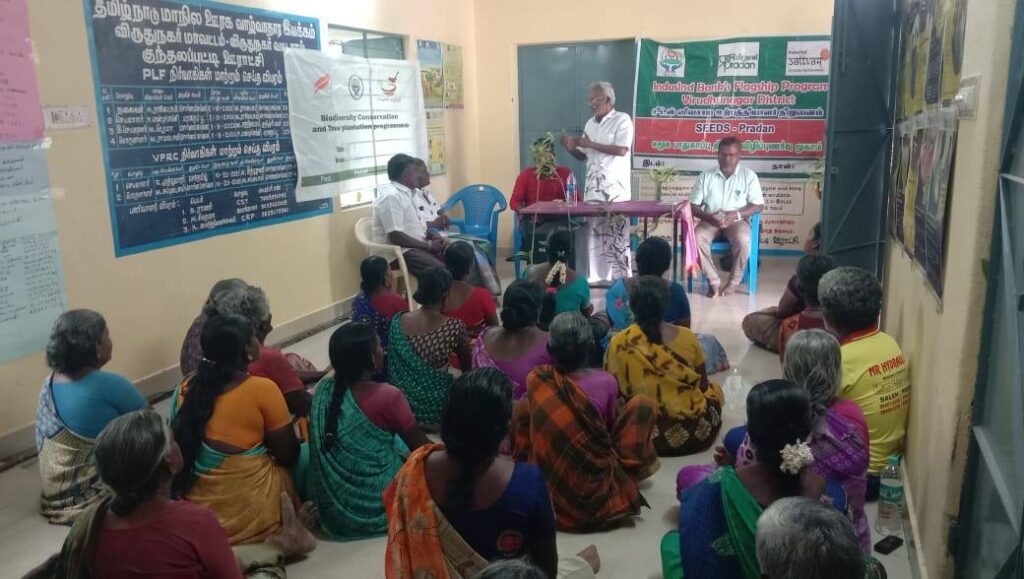
- Farmer engagement and awareness programs
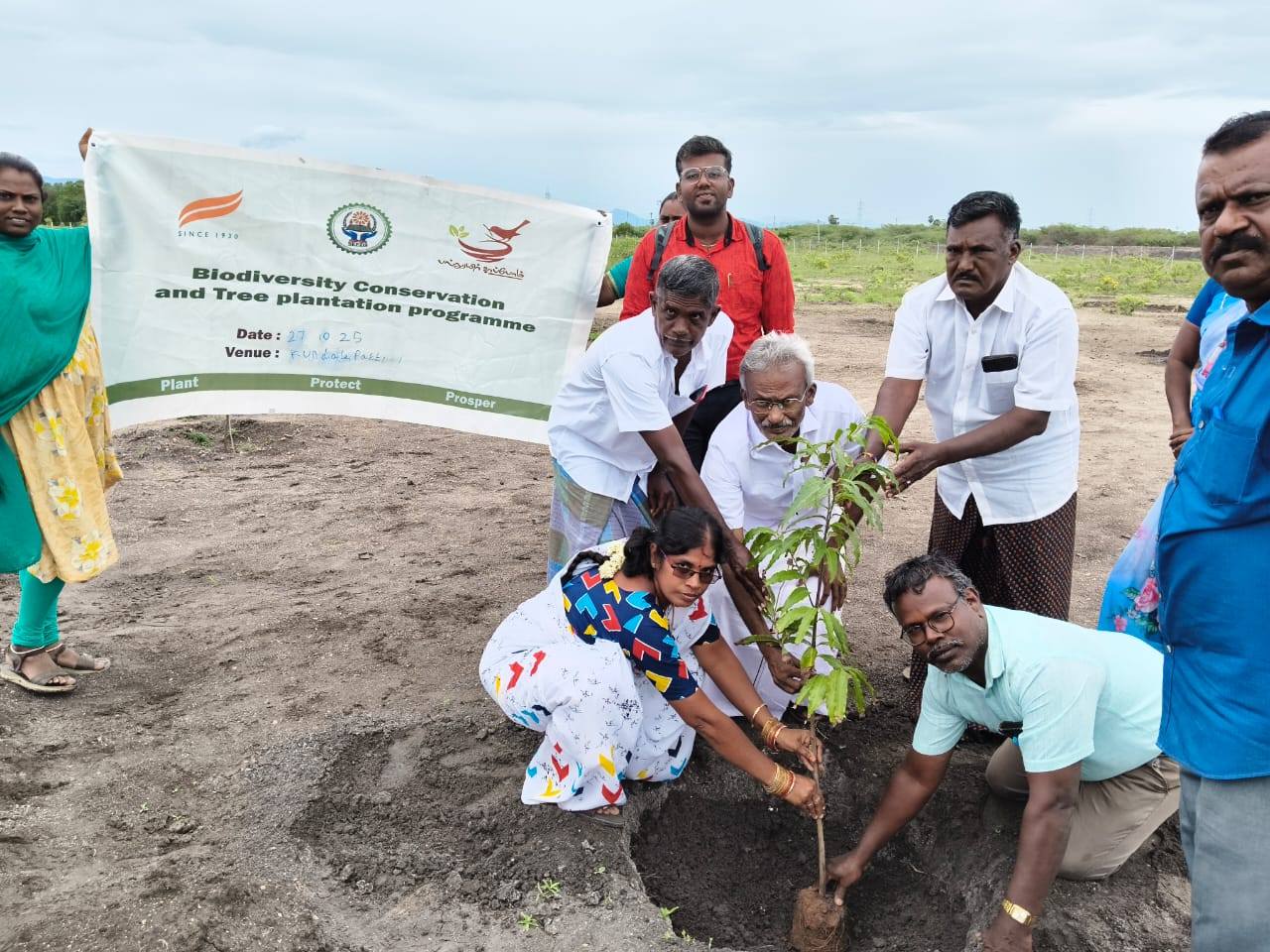
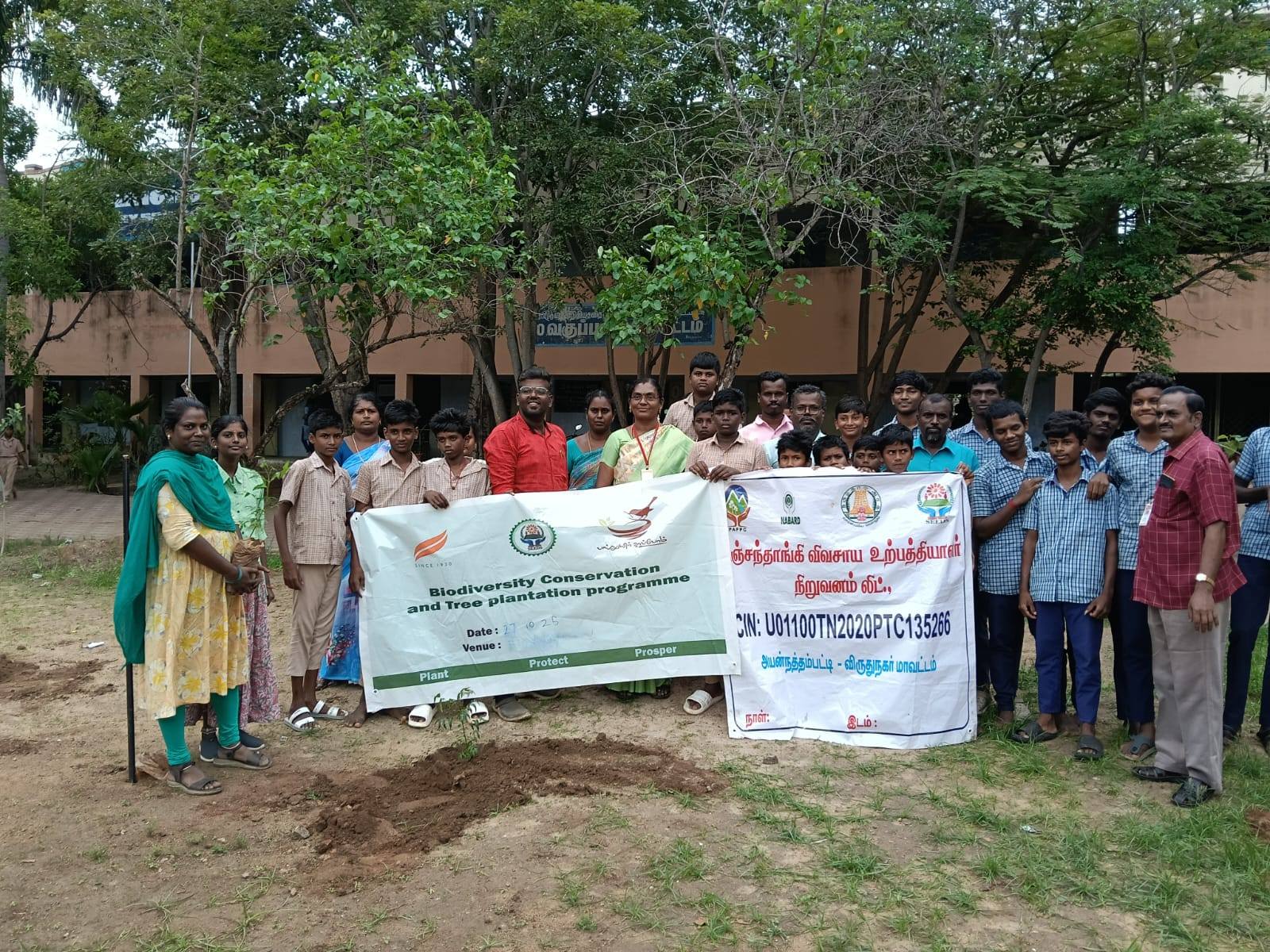
- Plantation in both farmlands (20,175 saplings) and common lands (15,700 saplings)
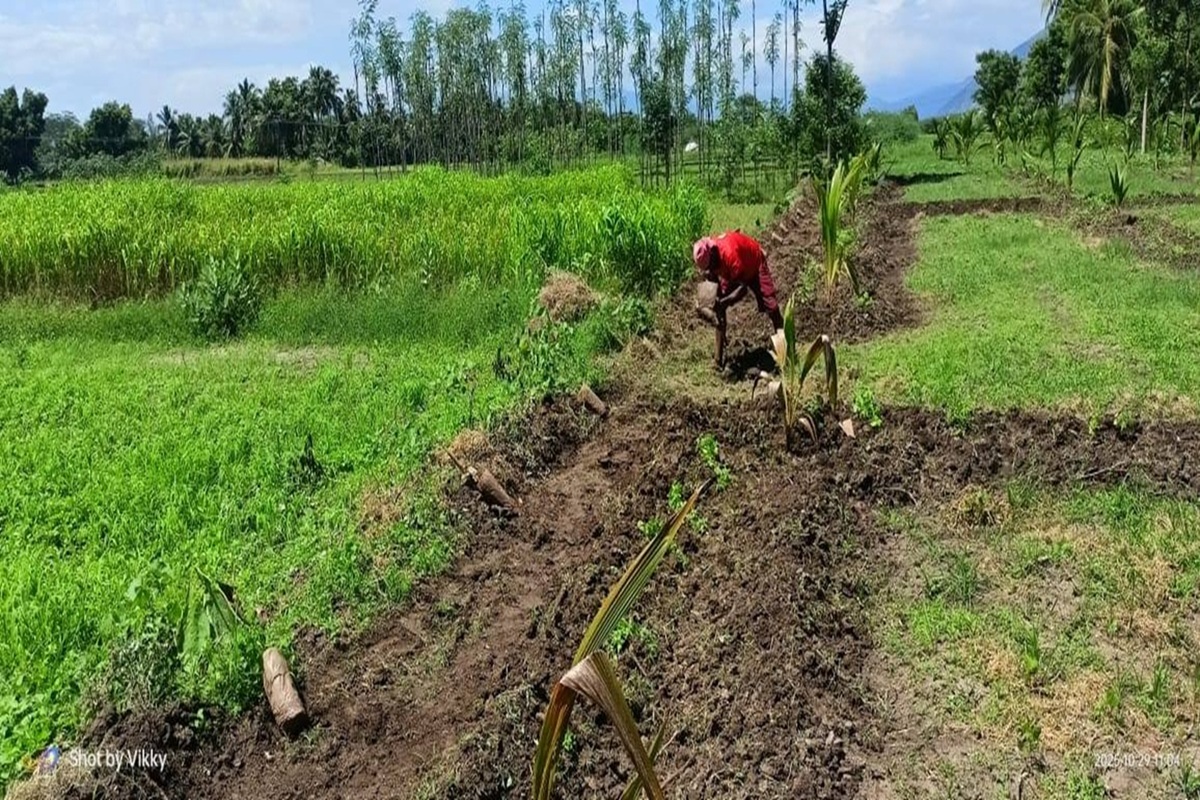
- Machine-supported pit digging and scientific spacing
- Continuous monitoring and field support
Environmental Impact
The project has initiated a major ecological transformation:
- Creation of 0.5 sq. km new green cover
- Restoration of dry and degraded lands
- Development of biodiversity habitats
- Improved groundwater recharge and soil health
Climate Impact
- 350 tons of carbon sequestration (initial years)
- 35,000 tons carbon sequestration (lifetime)
Contributing to climate change mitigation and carbon sink development.
Livelihood & Community Impact
- Generating future income through timber and NTFP (Non-Timber Forest Produce)
- Improving soil organic carbon and crop productivity
- Enhancing microclimate and reducing local temperatures
- Increasing pollinator activity for better agriculture
Farmers are particularly benefiting from high-value species such as teak, mahogany, red
sanders, neem, and fruit trees.
Innovation & Implementation
- Distribution of 3–4 ft high-quality saplings
- Machine-based pit digging
- Geo-tagging of plantation sites
- Capacity building of farmers and staff
- Engagement of 20+ field staff for monitoring
Sustainability & Maintenance
- Regular monitoring and field visits
- Community-led maintenance systems
- Geo-tagging and documentation of each plot
- Ensuring 90% survival rate of saplings